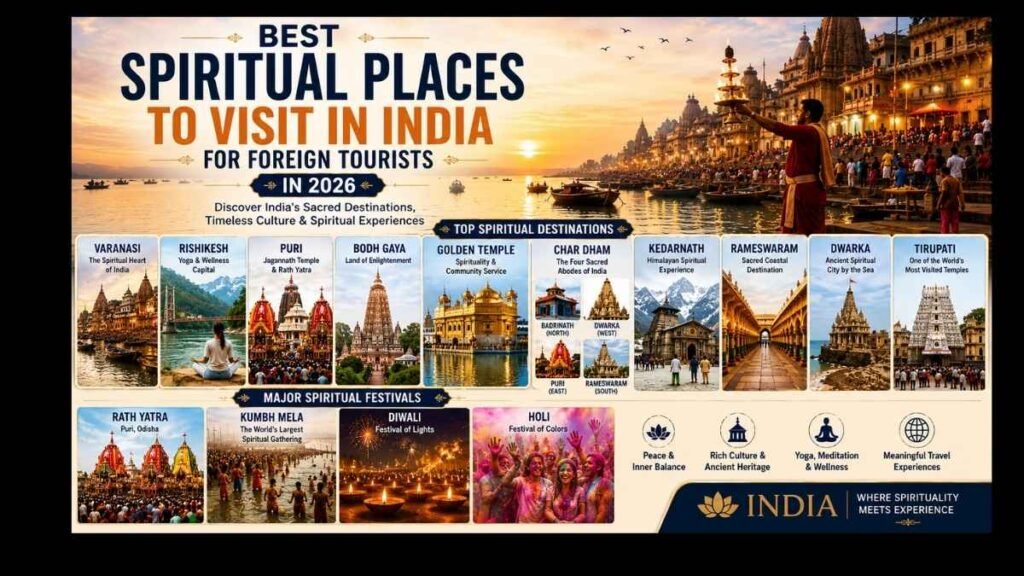
Over the last few years, interest in Hindu temples has grown far beyond India. In 2026, more travelers from the United States, the United Kingdom, and other Western countries are becoming curious about Indian spiritual culture, temple traditions, meditation practices, and peaceful travel experiences. What once felt unfamiliar to many international visitors is now becoming part of a larger global interest in spirituality and mindful living.
Across social media, travel blogs, documentaries, and wellness communities, Hindu temples are being discussed not only as religious places, but also as cultural, architectural, and emotional experiences. Many foreign visitors are no longer traveling only for beaches, shopping, or luxury vacations. Instead, they are searching for experiences that feel meaningful, peaceful, and deeply connected to history and culture.
This growing curiosity is one of the reasons spiritual tourism in India is expanding rapidly in 2026.
The Rise of Spiritual Tourism Around the World
Modern travel habits are changing. In the past, tourism was mainly focused on entertainment, sightseeing, and luxury experiences. Today, many travelers are looking for something more personal.
People are increasingly searching for:
- peaceful environments
- cultural understanding
- emotional balance
- mindful travel experiences
- spiritual learning
This global trend has helped spiritual tourism grow quickly in countries like India, Nepal, Thailand, and Japan.
India, in particular, has become one of the most important destinations for spiritual travelers because of its ancient traditions, temple culture, yoga heritage, and religious diversity.
For many American travelers, Hindu temples offer something very different from fast-paced modern life. They provide silence, rituals, history, music, architecture, and a strong sense of tradition that feels unique and memorable.
Why Hindu Temples Feel Different to Foreign Visitors
One of the first things international visitors notice is that Hindu temples are not only places for prayer. They are living cultural spaces filled with activity, emotion, and symbolism.
Inside and around temples, visitors often experience:
- devotional music
- colorful rituals
- flower decorations
- incense fragrance
- traditional clothing
- temple food offerings
- spiritual chanting
For many Western travelers, this atmosphere feels deeply immersive and emotional.
Unlike modern tourist attractions, temples often create an experience that feels timeless and connected to centuries of history.
This emotional and sensory experience is one reason why many foreign visitors remember temple visits long after returning home.
The Influence of Yoga and Meditation Culture
The popularity of yoga and meditation in the United States has also increased curiosity about Hindu traditions.
Millions of Americans now practice:
- yoga
- mindfulness
- meditation
- breathing exercises
- spiritual wellness routines
As people explore these practices more deeply, many become interested in understanding their cultural origins.
This naturally leads to curiosity about:
- Indian spirituality
- temple traditions
- Hindu philosophy
- sacred festivals
For some travelers, visiting a Hindu temple becomes part of a broader personal journey related to wellness and self-discovery.
Social Media Has Changed Global Curiosity
Social media platforms have played a major role in introducing Hindu temple culture to international audiences.
Platforms like:
regularly feature videos and images of:
- temple architecture
- spiritual festivals
- traditional rituals
- travel experiences in India
Foreign travelers who may never have considered visiting a temple before are now exposed to these visuals daily.
Many people first discover Indian temple culture online before deciding to learn more through articles, documentaries, or travel planning.

Temple Architecture Fascinates International Travelers
Another major reason Americans are becoming interested in Hindu temples is architecture.
Indian temples are known for:
- detailed carvings
- massive structures
- symbolic designs
- colorful artwork
- ancient construction techniques
For travelers interested in history, architecture, and art, Hindu temples feel very different from modern buildings.
Many visitors are surprised by the level of detail found in temple walls, pillars, domes, and sculptures.
Some temples were built hundreds or even thousands of years ago, yet still remain active places of worship today. This combination of history and living tradition creates strong curiosity among international travelers.
The Search for Peaceful Travel Experiences
Modern life in many Western countries has become increasingly fast and stressful. Long work schedules, social media pressure, and busy urban lifestyles have made many people search for slower and calmer experiences.
This is one reason peaceful travel is growing globally.
Many foreign visitors are now choosing destinations that offer:
- silence
- mindfulness
- emotional relaxation
- cultural depth
Hindu temples often provide exactly that atmosphere.
Even travelers who are not religious sometimes describe temple visits as calming and emotionally refreshing.
Why Younger Travelers Are Exploring Spiritual Culture
Young travelers in the United States and Europe are showing more interest in meaningful travel compared to older tourism trends.
Instead of only visiting luxury destinations, many younger tourists now prefer:
- cultural experiences
- local traditions
- authentic storytelling
- spiritual destinations
This trend is especially strong among people interested in wellness, self-growth, and mindful living.
For younger travelers, visiting a Hindu temple can feel educational, emotional, and culturally enriching at the same time.
The Global Popularity of Indian Festivals
Indian spiritual festivals have also attracted worldwide attention.
Events like:
- Rath Yatra
- Diwali
- Holi
are now recognized internationally.
Videos and photographs from these festivals often go viral online because of their:
- scale
- colors
- cultural energy
- emotional atmosphere
For foreign audiences, these festivals feel visually powerful and culturally unique.
Many international tourists now plan trips specifically around major Indian spiritual events.
Hindu Temples and Cultural Learning
Another important reason for growing interest is education.
Many travelers today want to understand cultures respectfully instead of only observing them from outside.
Temple visits allow people to learn about:
- traditions
- rituals
- mythology
- local history
- spiritual practices
This educational aspect makes temple tourism feel deeper than ordinary sightseeing.
Why India Is Becoming a Global Spiritual Destination
India is now seen by many travelers as one of the world’s leading spiritual tourism destinations.
The country offers:
- ancient temple traditions
- meditation culture
- yoga heritage
- diverse spiritual experiences
- historical religious sites
Unlike destinations focused only on entertainment, India often offers experiences connected with emotion, reflection, and cultural understanding.
This is why spiritual tourism in India is expected to continue growing strongly over the next decade.
What Foreign Visitors Often Find Most Surprising
Many first-time visitors to Hindu temples are surprised by several things:
1. The Emotional Atmosphere
Temples often feel deeply emotional and peaceful.
2. Community Participation
People of all ages participate actively in rituals and festivals.
3. The Architecture
The detail and symbolism impress many travelers.
4. Temple Food Traditions
Many visitors enjoy learning about sacred food offerings and community meals.
5. Spiritual Energy
Even non-religious visitors often describe temples as calming spaces.
Common Misunderstandings About Hindu Temples
Some international visitors initially assume temples are only for religious followers. In reality, many temples welcome respectful visitors from around the world.
However, cultural respect remains important.
Visitors are usually expected to:
- dress modestly
- remove shoes
- follow local customs
- maintain respectful behavior
Learning basic etiquette helps create a better experience for both tourists and local communities.
The Future of Spiritual Tourism in 2026 and Beyond
The rise of spiritual tourism is not a temporary trend. It reflects a larger global shift toward meaningful experiences.
Travelers increasingly want:
- emotional connection
- cultural depth
- peaceful environments
- authentic traditions
Hindu temples provide many of these experiences naturally.
As global curiosity about Indian spirituality continues growing, temple tourism is likely to become even more important in international travel culture.
What Travelers Can Learn From Temple Culture
Many foreign visitors leave India with more than photographs. They often return with new perspectives about:
- simplicity
- mindfulness
- community
- spirituality
- cultural respect
Temple experiences can encourage slower and more thoughtful travel habits.
Final Thoughts
The growing interest in Hindu temples among Americans and international travelers reflects a larger change in global travel culture. People are increasingly searching for experiences that feel meaningful, peaceful, and emotionally memorable.
Hindu temples offer a unique combination of spirituality, architecture, culture, history, and human connection that many modern travelers find deeply fascinating.
In 2026, spiritual tourism is no longer a niche travel category. It is becoming part of a worldwide movement toward more mindful and culturally connected experiences.
As curiosity about India’s spiritual traditions continues growing, Hindu temples will likely remain one of the most important cultural attractions for global travelers in the years ahead.