
For many international travelers, visiting India is not only about beaches, mountains, or famous landmarks. Increasingly, people from the United States, the United Kingdom, Europe, and Australia are coming to India searching for something more personal — culture, emotion, spirituality, and experiences that feel different from modern everyday life.
One of the places where this cultural experience becomes strongest is inside Indian temples.
Before arriving, many foreign visitors imagine temples as quiet religious buildings similar to churches, monasteries, or historical monuments they may have seen in other countries. But the reality often feels completely different.
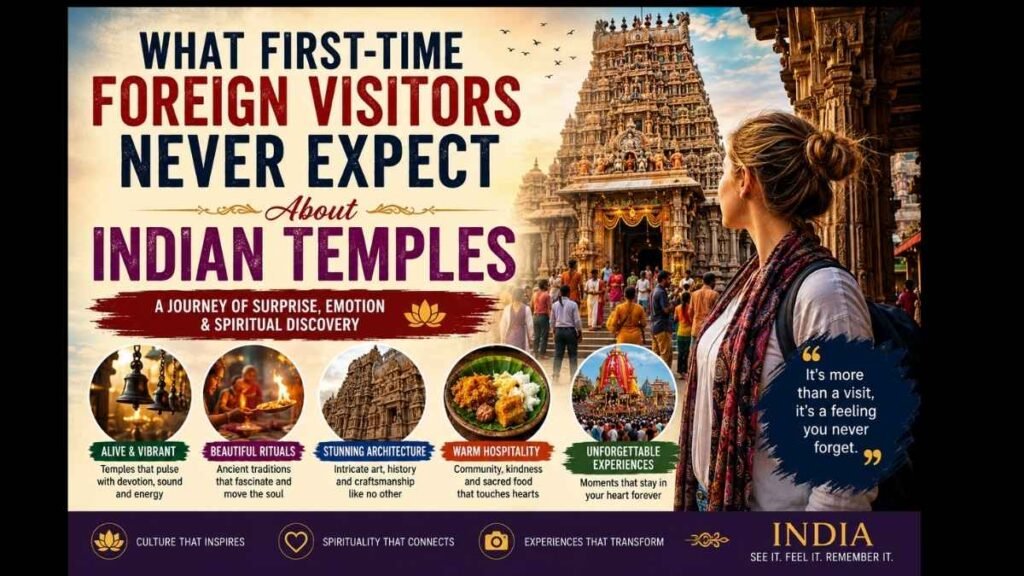
Indian temples are not simply places people visit for a few minutes before leaving. They are living spaces filled with sound, movement, emotion, rituals, colors, community, and centuries of tradition. For first-time foreign travelers, the experience can feel surprising, overwhelming, beautiful, and emotionally memorable all at the same time.
In 2026, spiritual tourism in India is growing rapidly because travelers are increasingly searching for meaningful experiences instead of only luxury vacations. As more international visitors explore India, many discover that temples become one of the most unforgettable parts of their journey.
This article explores what first-time foreign visitors never expect about Indian temples and why these experiences often stay with them long after they return home.
The First Surprise: Temples Feel Alive
One of the biggest surprises for international travelers is how alive Indian temples feel.
In many Western countries, religious buildings are often calm, silent, and highly structured. Visitors usually walk quietly, observe the architecture, and leave after a short visit.
Indian temples often feel completely different.
Visitors quickly notice:
- people praying emotionally
- bells ringing constantly
- devotional music playing
- incense smoke filling the air
- flowers everywhere
- priests performing rituals
- families gathering together
For many foreigners, the experience feels less like visiting a monument and more like entering a living cultural world.
The energy inside temples often surprises first-time visitors because everything feels active and emotionally connected.
The Emotional Atmosphere Can Feel Intense
Many international travelers say they are unprepared for the emotional intensity inside major temples.
People cry during prayers.
Families travel hundreds of kilometers for darshan.
Devotional singing continues for hours.
Crowds move with strong emotional energy.
Even visitors who are not religious often describe feeling emotionally affected by the atmosphere.
This happens because Indian temples are deeply connected to everyday life. For many local people, visiting a temple is not only tradition — it is part of personal identity, hope, gratitude, and emotional support.
Foreign visitors often sense this emotional connection immediately.
Foreign Travelers Notice the Importance of Community
Another thing many first-time visitors find fascinating is the strong community feeling around Indian temples.
People often:
- help strangers
- share food
- guide visitors
- participate together in rituals
- travel in groups with family members
In many countries, modern life has become highly individualistic. Indian temple culture, however, often feels community-centered.
This surprises many international tourists because they see how spirituality is shared collectively instead of privately.
For some travelers, this becomes one of the most meaningful parts of the experience.
The Sound Environment Feels Completely Different
Many first-time foreign visitors expect temples to be silent spaces. Instead, they discover environments filled with sound.
Temples often include:
- bells
- drums
- devotional chanting
- conch shells
- prayer songs
- public announcements
For travelers unfamiliar with Indian spiritual culture, the soundscape can feel overwhelming at first.
But many later describe these sounds as deeply memorable because they create a strong sensory atmosphere that feels emotionally immersive.
Some travelers even say the sounds remain in their memory long after the trip ends.
Temple Rituals Fascinate International Visitors
Another major surprise is the complexity and beauty of temple rituals.
Foreign visitors are often fascinated by:
- aarti ceremonies
- flower offerings
- lamps and fire rituals
- sacred food distribution
- ceremonial chanting
Unlike museum-style tourism, temple rituals feel active and participatory.
Even when visitors do not fully understand every tradition, many become emotionally interested in observing the symbolism and devotion behind these practices.
For photographers and cultural travelers, these moments often become the most visually memorable parts of the trip.
The Architecture Feels More Detailed Than Expected
Many international travelers arrive expecting beautiful architecture, but they are often surprised by the extraordinary level of detail found in Indian temples.
Visitors frequently notice:
- hand-carved pillars
- symbolic sculptures
- colorful ceilings
- intricate stonework
- mythological artwork
Some temples were built centuries ago yet still remain active spiritual centers today.
For many foreign tourists, this combination of:
- ancient history
- living culture
- architectural craftsmanship
feels unique compared to historical sites in other countries.
Temple architecture often becomes one of the biggest reasons visitors develop deeper curiosity about Indian culture.
The Crowds Surprise Many Travelers
One of the things first-time foreign visitors often underestimate is the number of people visiting temples.
Major spiritual destinations in India can attract:
- thousands of daily visitors
- massive festival crowds
- long waiting lines
- large public gatherings
For some travelers, the intensity feels shocking at first.
However, many later realize the crowds themselves are part of the cultural experience because they reflect how important spirituality remains in everyday Indian life.
Unlike some historical tourist attractions that mainly attract visitors, Indian temples continue functioning as deeply active spiritual spaces.
Temple Food Traditions Leave Strong Impressions
Many foreign tourists are also surprised by temple food culture.
In several temples across India, food is:
- prepared in traditional ways
- distributed to large groups
- shared collectively
- connected with spiritual rituals
Visitors often describe these experiences as warm and welcoming.
Community kitchens and food offerings create a feeling of hospitality that many international travelers deeply appreciate.
The idea that thousands of people can eat together regardless of background often leaves a lasting emotional impression.
Foreign Visitors Often Feel Spiritually Curious
Interestingly, many travelers who do not consider themselves religious still become spiritually curious while visiting Indian temples.
This happens because temples often create:
- emotional reflection
- peaceful moments
- sensory immersion
- cultural fascination
Some travelers describe feeling calmer.
Others feel emotionally moved without fully understanding why.
For many visitors, temple experiences become less about religion and more about human emotion, tradition, and connection.
Festivals Create an Even Stronger Experience
Visitors attending temple festivals often experience Indian spirituality at its most intense and emotional level.
Events like:
- Rath Yatra
- Diwali
- Kumbh Mela
introduce travelers to:
- massive crowds
- spiritual celebrations
- colorful rituals
- emotional devotion
For first-time visitors, these festivals often feel completely different from celebrations they have experienced elsewhere in the world.
Many travelers describe the atmosphere as emotionally overwhelming in both exciting and unforgettable ways.
The Contrast Between Chaos and Peace
One of the most interesting observations many international visitors make is the unusual balance between chaos and peace around Indian temples.
Outside:
- crowded streets
- traffic
- noise
- movement
Inside:
- moments of silence
- prayer
- reflection
- emotional calm
This contrast fascinates many travelers because it reflects the complexity of Indian culture itself — energetic, emotional, crowded, yet deeply spiritual at the same time.
Why Younger Travelers Are Especially Interested
In 2026, younger travelers are increasingly searching for experiences that feel:
- authentic
- meaningful
- emotionally memorable
Many younger tourists are becoming less interested in traditional luxury tourism and more interested in:
- culture
- spirituality
- local traditions
- slow travel
- mindful experiences
Indian temples naturally attract this kind of traveler because they offer experiences that feel emotionally real rather than commercially designed.
Social Media Has Increased Global Curiosity
Social media has also played a major role in changing how foreign travelers view Indian temples.
Platforms like:
- YouTube
have introduced millions of people to:
- temple festivals
- spiritual rituals
- architecture
- devotional traditions
Many international visitors first become curious after watching travel videos or seeing photographs online.
However, most travelers later say the real experience feels much more emotional and powerful in person.
What Travelers Learn From Visiting Indian Temples
Many foreign visitors leave India with more than photographs.
Temple visits often encourage reflection about:
- community
- simplicity
- spirituality
- emotional connection
- cultural diversity
Some travelers say the experience changes how they think about travel itself.
Instead of only collecting destinations, they begin valuing experiences that feel meaningful and emotionally memorable.
Conclusion
For many first-time foreign visitors, Indian temples become one of the most unexpected and unforgettable parts of traveling in India.
The emotional atmosphere, community energy, rituals, architecture, sounds, and spiritual intensity create experiences that feel very different from ordinary tourism.
In 2026, as more travelers search for meaningful and culturally immersive journeys, Indian temples continue attracting international visitors who want more than sightseeing. They want emotion, connection, curiosity, and experiences that stay in memory long after the trip ends.
That is one reason spiritual tourism in India continues growing worldwide.